
The devotion to the Most Precious Blood of Jesus Christ is one of the most profound expressions of Catholic liturgy. Traditionally celebrated throughout the month of July, and specifically on July 1st, this devotion contemplates the mystery of Christ’s redeeming sacrifice as the infinite price paid for our salvation.
Historical Context and Liturgical Origins
While reverence for the Blood of Christ is as old as the Church—deeply rooted in the Pauline theology of the New Covenant and the Eucharistic liturgy—its universal liturgical feast was instituted relatively recently, in 1849 by Pope Pius IX. During his exile in Gaeta, amidst the revolutions that temporarily overthrew the Papal States, the Pope vowed to extend the feast of the Precious Blood to the entire universal Church if peace were restored. Following his return to Rome, he fulfilled this promise, establishing the feast on the first Sunday of July.
Later, in 1960, Pope John XXIII elevated the liturgical rank of the feast and promulgated the historic Apostolic Letter “Inde a Primis”, dedicated entirely to promoting this devotion. In this document, the Pope explained that the devotion to the Precious Blood must shine in harmony with the devotions to the Sacred Heart and the Holy Name of Jesus:
“Since the value of the blood of the God-man, Jesus Christ, is infinite, and the love which moved him to shed it is infinite, it is not only fitting but highly proper that all those born again in its salutary torrents pay it the homage of adoration and grateful love.” — Pope John XXIII, Inde a Primis
Through this letter, Pope John XXIII officially approved the Litany of the Most Precious Blood for both public and private recitation. He also ordered the inclusion of the invocation “Blessed be His Most Precious Blood” in the Divine Praises recited at the conclusion of Eucharistic Benediction.
Theology of the Precious Blood
Catholic theology teaches that the Precious Blood of Christ is worthy of supreme adoration (latria) because it is hypostatically united to the Divine Person of the Word of God. In worshipping the Blood, we do not adore a physical element in isolation, but the person of Christ Himself, who poured it out for our sake.
As Saint Peter reminds the early Christians in his first epistle (1 Pet 1:18-19): “You were ransomed… not with perishable things like silver or gold, but with the precious blood of Christ, like that of a lamb without blemish or spot.” The Blood is the seal of the New and Eternal Covenant, the medicine that heals humanity’s deep spiritual wounds, and the chalice of salvation received in the Holy Eucharist.
Traditional Hymns of the Precious Blood
For centuries, saints and theologians have written sublime hymns to honor the mystery of the redeeming Blood. These Latin prayers, translated here as they appear in the traditional liturgy, provide a sanctuary of peace and consolation for the soul:
1. Anima Christi (Soul of Christ)
This ancient prayer, deeply loved by Saint Ignatius of Loyola, asks that the Blood of Christ wash over the soul, bringing spiritual strength and comfort:
Soul of Christ, make me holy. Body of Christ, save me. Blood of Christ, fill me with grace. Water from the side of Christ, wash me. Passion of Christ, strengthen me. O good Jesus, hear me. Hide me within Your wounds. Do not let me be separated from You. Defend me from the evil enemy. At the hour of my death, call me. And command me to come to You. That with Your saints I may praise You, forever and ever. Amen.
2. Adoro Te Devote (I Adore You Devoutly)
Written by Saint Thomas Aquinas, this hymn of Eucharistic adoration contains the famous figure of the Loving Pelican, a medieval symbol of Christ feeding and cleansing His children with His own Blood:
I adore You devoutly, hidden Divinity, truly concealed beneath these sacred signs. To You my whole heart surrenders, for in contemplating You, it gives itself completely. Sight, touch, and taste are silent before You, but by hearing alone, faith rests secure. I believe all that the Son of God has spoken, for no word is truer than the Word of Truth.
[Fides Sub Velo] On the Cross, only the Divinity was hidden, but here, humanity and Divinity are both concealed. Yet believing and confessing both, I ask what the repentant thief once asked. I do not see the wounds as Thomas did; **yet I confess You as my God. ** Make me believe in You more deeply, to hope in You, and to love You.
[Pie Pellicane] O memorial of the death of the Lord, living Bread, giving life to the soul. Grant that my heart may live from You, and forever taste Your sweetness. Loving Pelican, Lord Jesus, cleanse my impurity with Your Blood. One single drop of it can save the whole world from every stain. Jesus, whom I now behold beneath the veil, grant the longing for which I thirst: that, seeing Your face unveiled, I may be blessed by the vision of Your glory. Amen.
3. Pange Lingua Gloriosi (Sing, My Tongue)
Also composed by Saint Thomas Aquinas for the Solemnity of Corpus Christi, this hymn sings of the glorious mystery of the Body and the Precious Blood poured out for the world:
Sing, my tongue, the glorious mystery of the Body, and of the Precious Blood, poured out as the price of the world. From a noble Virgin born, the King shed it for all nations. Given for us, born for us from the untouched Virgin, He walked among us in the world, sowing the seed of the Word. His dwelling among us He closed in wondrous order. Amen.
4. Vexilla Regis (The Banners of the King)
Written in the 6th century by Venantius Fortunatus, this solemn hymn contemplates the Cross adorned with the royal purple of Christ’s Blood:
The banners of the King go forth, the mystery of the Cross shines bright, where the Maker of all flesh, in flesh, was lifted upon the tree. Wounded there as well by the cruel spear, so that He might wash away our sin, water and Blood flowed out.
Fulfilled are the words once sung by David in faithful song, proclaiming to the nations: God has reigned from the wood. O beautiful and radiant Tree, adorned with the purple of the King, chosen as the worthy trunk to touch such holy limbs. Blessed are your arms, where hung the price of the world; His body became the balance, and rescued the prey from darkness.
[Spes Unica] In this time of the Passion, increase grace for the faithful. And wipe away the sins of the guilty. In the Cross of salvation, in the Blood of Christ, grant us peace. Amen.
Contemplation and Prayer in Video
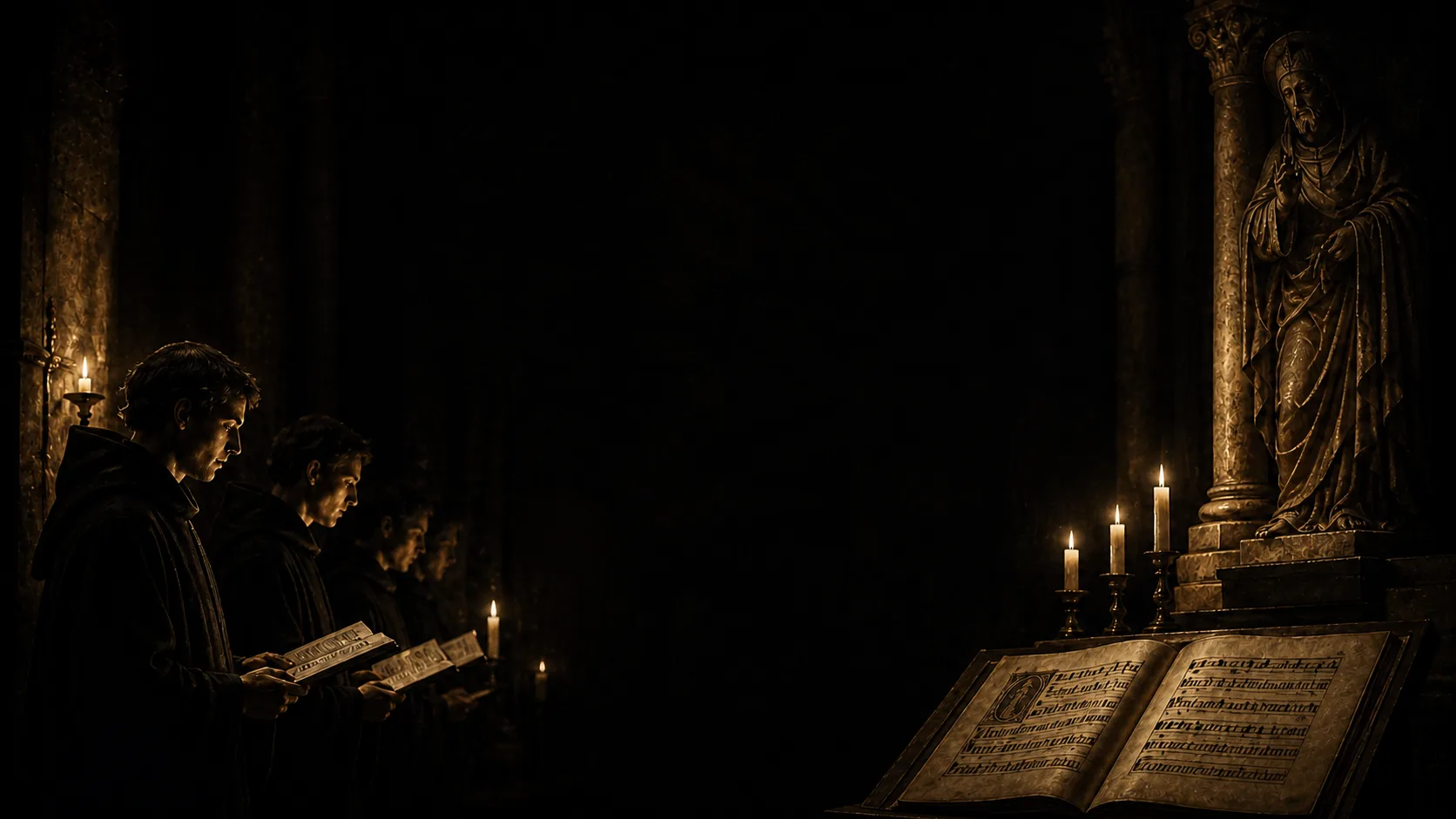
To enrich your quiet hours of prayer and reflection, we invite you to pray with our video of the Most Precious Blood of Jesus on YouTube. This presentation combines solemn Gregorian-inspired chant with the traditional Latin prayers and the Litany of the Precious Blood, creating a peaceful schola-like atmosphere for the consolation of the soul.
Frequently Asked Questions (FAQ)
Why is the month of July dedicated to the Precious Blood?
The month of July is dedicated to the Precious Blood because the feast day of the Most Precious Blood was traditionally established on July 1st. In 1849, Pope Pius IX extended the feast day to the entire universal Church, leading to the custom of dedicating the entire month to this mystery of redemption.
What is the difference between Corpus Christi and the Feast of the Precious Blood?
The Solemnity of Corpus Christi celebrates the general mystery of the Eucharist (the Body and Blood of Christ) under the aspect of His real sacramental presence. The Feast of the Most Precious Blood focuses specifically on the mystery of redemption and the salvific shedding of Christ’s Blood on the Cross as the absolute price of humanity’s salvation.
Why is Christ referred to as the “Pious Pelican” in traditional hymns?
According to medieval legends, the pelican would pierce its own breast to feed its dying young with its own blood in times of famine. This became a powerful symbol of Christ’s sacrificial love on the Cross and in the Eucharist, where He nourishes and cleanses His Church with His own Precious Blood.
What was the purpose of Pope John XXIII’s letter “Inde a Primis”?
In his 1960 letter Inde a Primis, Pope John XXIII sought to revitalize the devotion to the Precious Blood, noting its equal importance alongside the devotions to the Sacred Heart and the Holy Name of Jesus. He officially approved the Litany of the Precious Blood for public liturgical use and encouraged families to pray it regularly.
Consult our Complete Catholic Santoral to view the calendar for this month.
Join Our YouTube Community
Subscribe to our channel to listen to complete Gregorian chants, traditional prayers, and sung meditations.
Subscribe on YouTube 🔔