
Modern noise fragments the soul, leaving a wound of distraction and anxiety. The contemporary soul begs for the silence and inner order that, centuries ago, a soldier found in the stillness of a cave in Manresa. St. Ignatius of Loyola discovered that the fiercest combat is not fought with swords, but within the human heart.
What are the Spiritual Exercises of St. Ignatius?
The Spiritual Exercises are a method of prayer, meditation, and contemplation designed by St. Ignatius to order one’s life and seek God’s will. Their purpose is to draw the soul away from noise so it can clearly discern the divine voice and purify disordered affections.
Through silence and structured meditation, this prolonged retreat acts as a mirror for the soul. It compels the individual to face their weaknesses and gently leads them toward the light of Christian redemption. The Catechism of the Catholic Church reminds us that prayer is a constant interior battle.
The Basque saint understood that the devil works through agitation and haste. Conversely, the Holy Spirit infuses peace, consolation, and a serene conviction. This discernment of spirits is the most precious legacy Ignatius left to a Church in need of contemplatives in action.
The Acoustics of the Soul and the Anima Christi
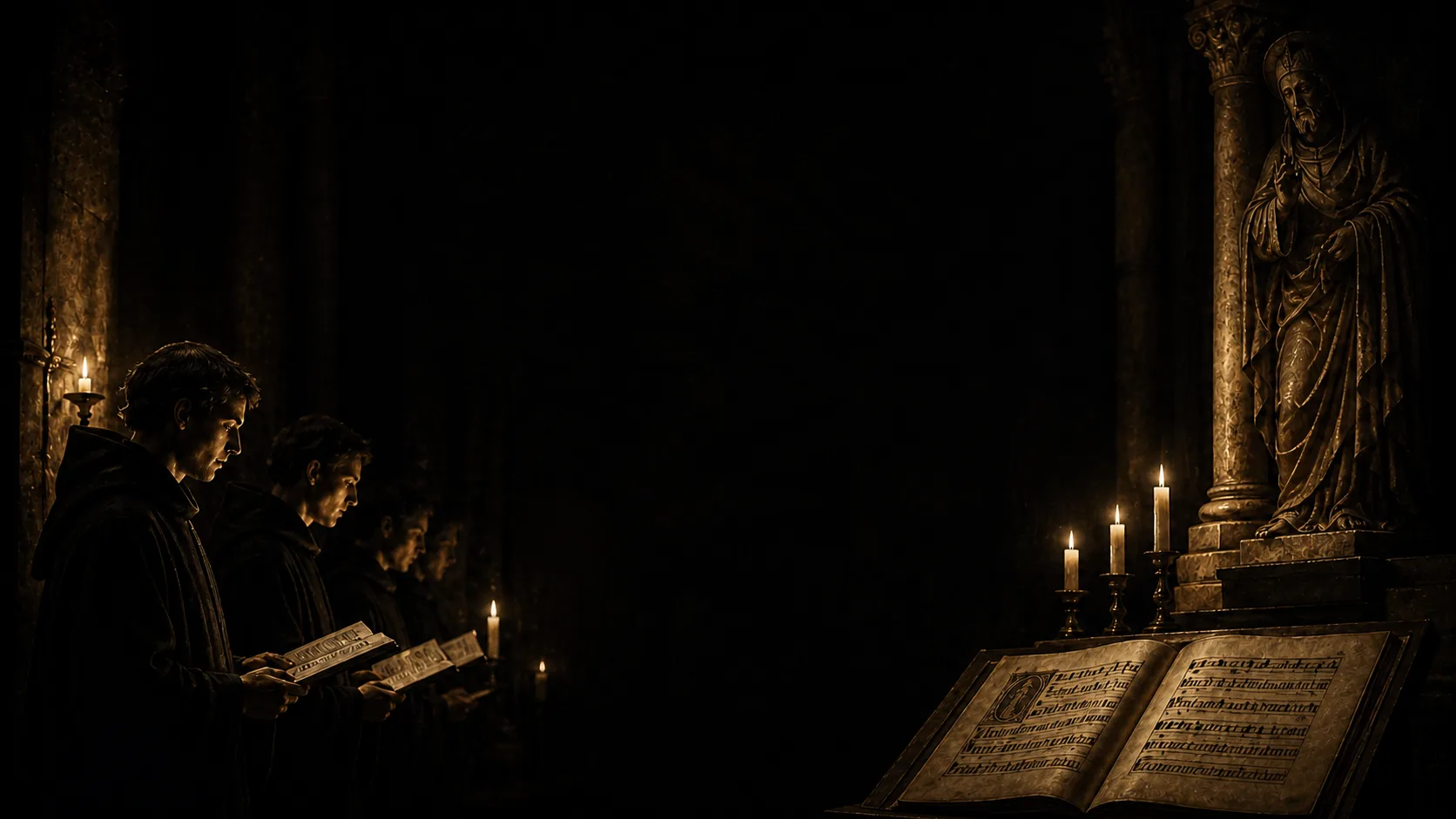
Although the hymn Anima Christi (Soul of Christ) predates St. Ignatius, he popularized it by including it at the beginning of his Exercises. Its unhurried recitation finds a natural echo in liturgical chant. The open vowels of Latin (“Anima Christi, sanctifica me”) allow for a vocal resonance that physically calms the heart rate.
When chanted in stone abbeys, the natural reverberation of the architecture underscores the plea: “Intra tua vulnera absconde me” (Hide me within Thy wounds). The chant becomes a refuge, a sonic space where the believer finds supernatural strength and consolation.
What Gregorian chants are sung on the feast of St. Ignatius?
On the feast of St. Ignatius, the Church sings the Introit In nomine Iesu, proclaiming the majesty of Christ, and the Alleluia Beatus vir, which exalts the man who fears the Lord. These pieces reflect the saint’s total submission to the greater glory of God.
The Introit In nomine Iesu, typically associated with Mode III, possesses a mystical and intimate character, inviting profound adoration. The half-step in its melodic development emphasizes the reverence demanded by the name of Jesus, compelling every knee to bend in heaven and on earth.
The Gradual or the Alleluia Beatus vir (Mode I) resonates with a serene gravity. The first mode, considered solemn and majestic, reflects the nobility of character of Ignatius, a soldier turned general of a spiritual army. The broad, sustained notes embody monastic discipline and stability.
The communion, frequently drawn from the Gospel about the fire Christ came to cast on the earth (Luke 12:49), utilizes bold intervals to express apostolic zeal. The music envelops the intellect and submits it to divine love, just as Ignatius prayed: “Take, Lord, and receive all my liberty.”
Join Our YouTube Community
Subscribe to our channel to listen to complete Gregorian chants, traditional prayers, and sung meditations.
Subscribe on YouTube 🔔