
Saint Bernard of Clairvaux: The Mellifluous Doctor and the Purity of Cistercian Chant
In a world saturated with noise and constant distraction, the figure of Saint Bernard of Clairvaux emerges as an urgent invitation to recover interior silence. The modern soul, exhausted by acoustic pollution, yearns for the stillness that this 12th-century abbot cultivated within the stone walls of his monastery. For Bernard, sound was not an end in itself, but a bridge to the eternal.
Silence is not simply the absence of noise. It is the necessary space where the human spirit can hear the voice of God. In the valleys of Cîteaux, chant and silence became the two wings on which monks soared toward the contemplation of divine mysteries.
What was the Cistercian reform of Gregorian chant?
The 12th-century Cistercian reform, driven by Saint Bernard, was a process of musical purification. It simplified Gregorian melodies by eliminating excessive melismas and correcting melodic ranges to foster humility, textual comprehension, and spiritual focus in monastic prayer.
When the first Cistercians established themselves, they sought to restore the Rule of Saint Benedict in all its purity. This included the liturgy. Saint Bernard observed that the monastic choirs of his time delighted too much in vocal complexity, losing sight of the Word of God.
In their Tractatus de cantu, Bernard and the Cistercian reformers established that chant must serve prayer. They reduced the ambitus (the melodic range) to a limit of ten notes, preventing vocal strain and ensuring a tone of profound reverence.
Why is Saint Bernard called the Mellifluous Doctor?
Saint Bernard was given the title of “Mellifluous Doctor” because of the sweetness of his doctrine and preaching. His words flowed like honey, penetrating the human heart with exceptional spiritual tenderness, especially in his sermons on the Song of Songs and his devotion to the Virgin Mary.
Bernard’s eloquence was not the product of intellectual vanity, but of his intimate communion with Christ. His sermons distilled the wisdom acquired in long vigils of silent adoration.
In his eighty-six sermons on the Song of Songs, he describes the soul’s relationship with God using profoundly nuptial and musical language, inviting the monk to tune his own spirit so that it resonates in unison with divine love.
The Acoustics of Humility in Cistercian Monasteries
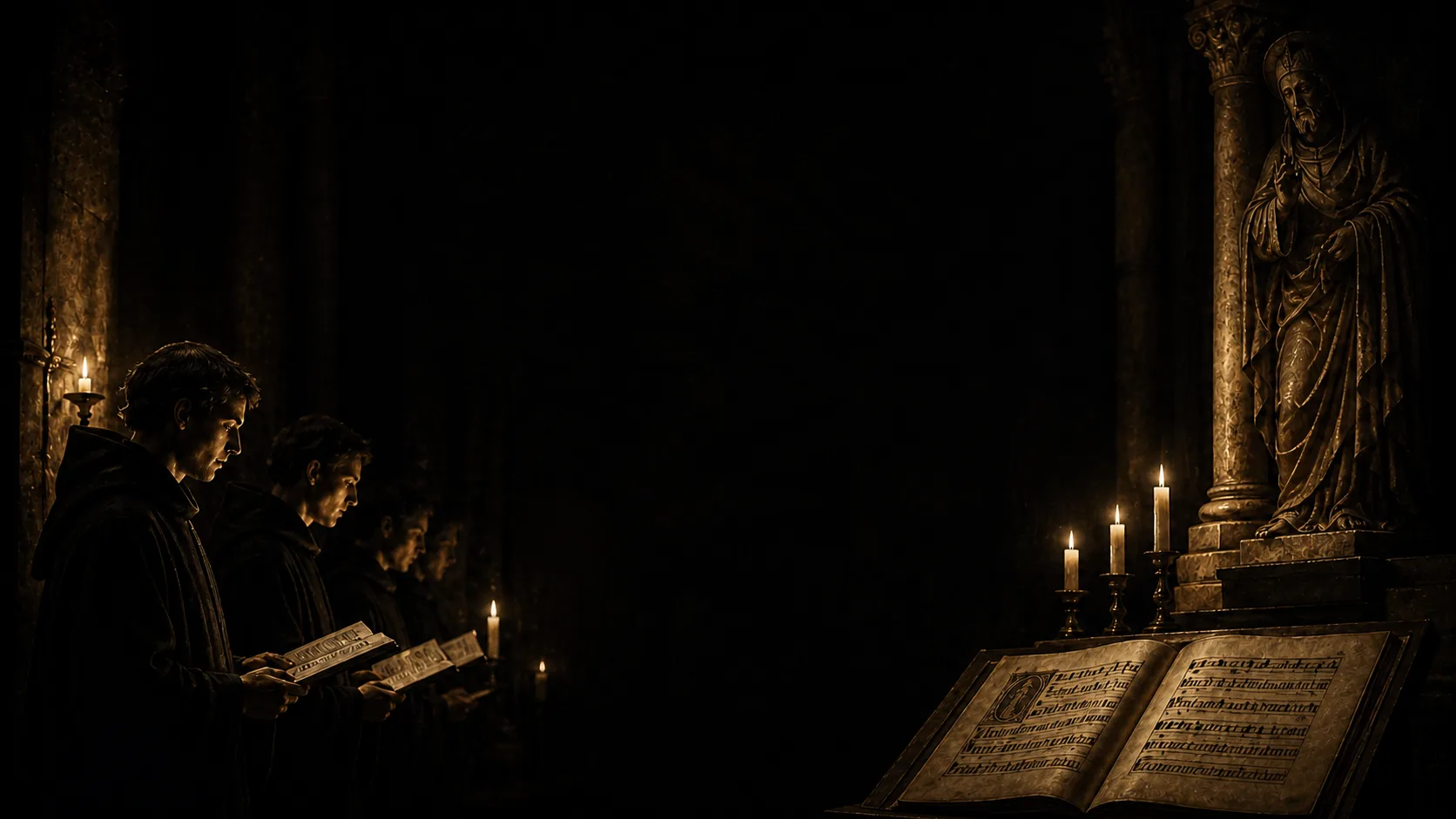
The architecture of Cistercian abbeys, stripped of superfluous adornment, was deliberately designed for the acoustics of humility. The bare stone churches, devoid of colorful stained glass, amplified the naked purity of the human voice.
Cistercian chant eschewed the grand displays of the Cluniac monasteries. By suppressing the prolonged melismas that stretched a single syllable across dozens of notes, the monks ensured that the liturgical text remained always intelligible.
Cistercian spirituality, enshrined in the Statutes of the Order, demanded that the cantors intone the psalms vivaciter et viriliter, but always with a profound sense of reverential awe in the presence of God.
Gregorian Echoes of the Feast of Saint Bernard
In the traditional liturgy, the antiphons and chants honoring confessors and doctors take on a deeply meditative character. The Introit In medio Ecclesiae, proper to the Doctors of the Church, frequently resonates in Mode VI (Tritus Plagal). This mode evokes a serene firmness, reflecting the solidity of the doctrine taught.
The communion chant, often drawn from the Gospel of Saint Matthew (Fidelis servus et prudens), is typically sung in Mode VII (Tetrardus Authentic). The spiritual elevation and brilliance of this mode announce the heavenly reward for the faithful servant who has nourished the flock of Christ.
For the soul seeking refuge today, the legacy of Saint Bernard of Clairvaux is a guiding light. He teaches us that liturgical beauty does not lie in virtuosic complexity, but in a purified heart that, from within silence, dares to sing to its Creator.
Join Our YouTube Community
Subscribe to our channel to listen to complete Gregorian chants, traditional prayers, and sung meditations.
Subscribe on YouTube 🔔